
Pinellas County
Parent Cottages and In-Law Suites in St. Petersburg
Building a cottage for a parent in St. Petersburg does not tie you to living on the property afterward, which matters if the family's plans could change. The city requires neither owner occupancy nor a homestead for an ADU, and both units may be rented long term with a Business Tax Certificate.
Request a quote in St. Petersburg
Who the space is for, whether it needs a kitchen, and the address. With those three answers we can say which city or county rules govern the lot before a contractor draws anything.
$100 off your first job
Credited by us on your first booked job.
- One credit per customer per property, on your first booked job.
- Valid through December 31, 2026.
Mention this offer when you book. Full terms.
St. Pete's two categories: accessory living space or an ADU
St. Pete sorts a parent's space by what is inside it. Accessory living space works as part of the house: no separate kitchen, laundry, mailing address or meter, and no more than 800 square feet or 67 percent of the main home. Put a stove in and it is an ADU, which needs a qualifying lot: at least 4,500 square feet in the NT districts, and in the NS districts 10,000 square feet, an alley lot of 4,500 or a qualifying corner lot. On a small bungalow the 67 percent rule is often the real ceiling. Flood is the other limit. Seven in ten St. Pete homes were built before 1980, the city caps remodeling in the flood zone at 49 percent of the home's value, and a new ADU there has to be built elevated, from architectural or engineered plans. Homesteads inside the city are not covered by the county's parent or grandparent tax reduction, so leave it out of the budget.
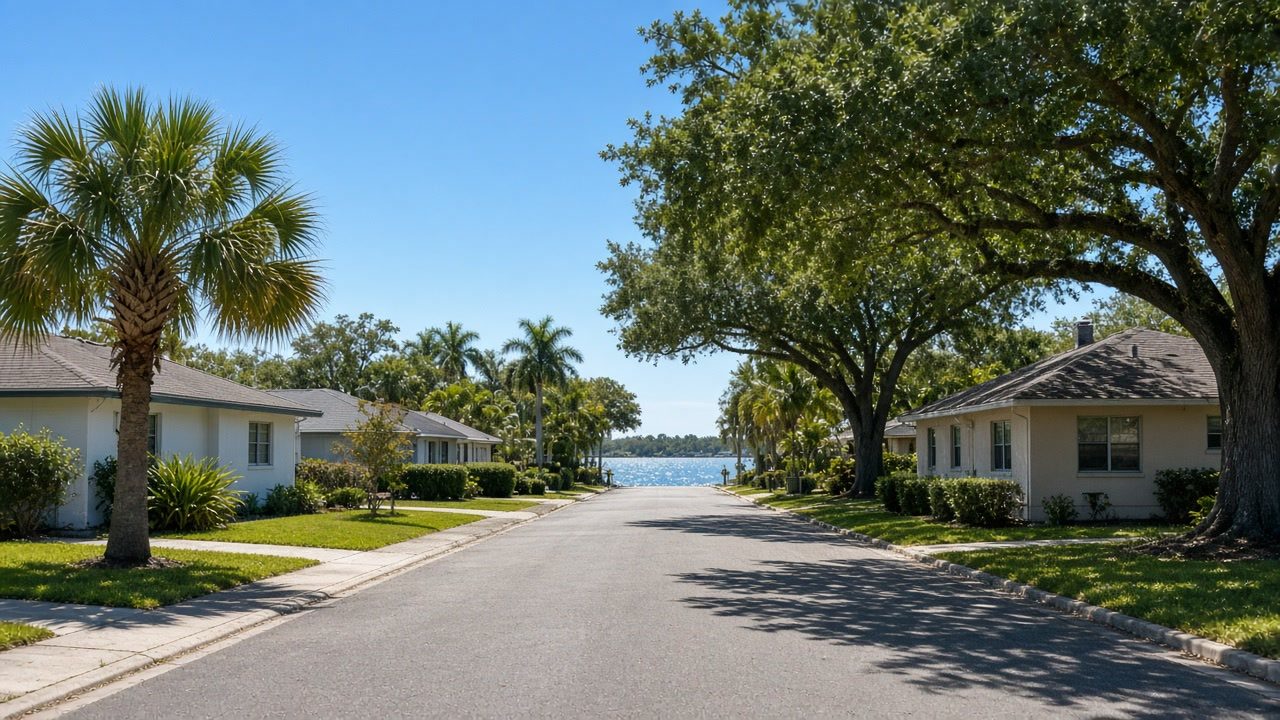
Is your St. Pete lot zoned NT or NS?
Tell us the address and the lot size. We will tell you whether a detached unit is on the table or whether an attached suite is the route, before anyone draws it.
Additions and backyard units arranged in St. Petersburg
In-Law Suite Additions
Add a bedroom, a bathroom and a sitting room onto the house so a parent can live with you and still close a door of their own, planned so the kitchen decision does not turn it into a second dwelling by accident.
In-Law Suites in St. Petersburg →First-Floor Primary Suite Additions
Put a bedroom and a bathroom on the ground floor for someone who can no longer manage the stairs, without the addition pulling the whole house under current flood rules.
First-Floor Suites in St. Petersburg →Detached ADUs and Backyard Cottages
Put a small, separate home in the backyard for a parent, close enough to help and far enough for their own front door, under the rules that actually govern the lot.
Detached ADUs in St. Petersburg →St. Petersburg's ADU, living space and flood rules
St. Petersburg does not require the main unit to be owner occupied or homesteaded for an ADU; if both units are rented, a Business Tax Certificate is required. Separate meters and a separate address are allowed, and rentals under 30 days are limited to three times in 365 days.
Source: City of St. Petersburg, accessed 2026-09-23
St. Petersburg separately regulates accessory living space, which must operate as an extension of the principal home: separate cooking and laundry facilities, a separate mailing address and separate utility meters are all prohibited, and floor area is capped at 800 square feet or 67 percent of the principal dwelling.
Source: City of St. Petersburg (Municode), accessed 2026-09-23
St. Petersburg (Sec. 16.50.010, amended 7-10-2025) caps an ADU at 800 square feet of gross floor area, with all areas under roof no more than 67 percent of the principal dwelling's floor area. A new ADU needs a lot of at least 4,500 square feet in NT districts, and in NS districts a lot of at least 10,000 square feet, an alley lot of at least 4,500 square feet, or a qualifying corner lot.
Source: City of St. Petersburg (Municode), accessed 2026-09-23
The City of St. Petersburg's ADU guidance says new buildings in the flood zone must be elevated and remodeling is limited to 49 percent of the value of the home.
Source: City of St. Petersburg, accessed 2026-09-23
The 2020-2024 American Community Survey estimates St. Petersburg's median age at 43.1, with 21.1 percent of residents aged 65 or older and 25.6 percent aged 62 or older, compared with 26.4 percent aged 65 or older in Pinellas County. Of its 141,508 housing units, 70.1 percent were built before 1980 and 14.3 percent in 2000 or later.
Source: U.S. Census Bureau, American Community Survey, accessed 2026-09-23
St. Petersburg's ADU guidance says a residential or general contractor is generally required unless the ADU is occupied by the property owner who qualifies as an owner-builder under Chapter 489, and that new structures need architectural or engineered plans with energy calculations.
Source: City of St. Petersburg, accessed 2026-09-23
Because the Pinellas County parent or grandparent reduction requires the property to be in unincorporated Pinellas County, homesteads inside St. Petersburg, Clearwater, Largo, Pinellas Park, Dunedin, Seminole, Safety Harbor, Tarpon Springs and Oldsmar do not qualify under the county program as the Property Appraiser describes it.
Source: Pinellas County Property Appraiser, accessed 2026-09-23
Plan the St. Petersburg suite around the flood zone
Send the address and roughly how big the house is. We connect you with a licensed contractor who prices the work against the 49 percent ceiling from the start.